Ever poured your soul into a cause—only to watch your petition gather digital dust while your inbox fills with “thanks, but no thanks” from local officials?
You’re not alone. According to the Pew Research Center, 68% of U.S. adults believe they can influence their communities—but only 28% have actually taken organized action in the past year.
That gap? It’s where grassroots campaigns live—and die.
If you’re an educator, marketer, or community builder trying to mobilize real people around real change (without a billionaire donor or a PR firm), this guide is your playbook. We’ll walk through exactly how to start a grassroots campaign that builds trust, inspires action, and scales organically—even if you’re working from your kitchen table with zero budget.
You’ll learn:
- Why most grassroots efforts fizzle before Day 30—and how to avoid it
- The 5 non-negotiable steps to launch with momentum
- Real tactics used by successful hyperlocal movements (like the Austin Tenant Union)
- What NOT to do—even if every influencer says otherwise
Table of Contents
- Why Most Grassroots Campaigns Fizzle Out
- Step-by-Step: How to Start a Grassroots Campaign That Sticks
- 7 Best Practices for Authentic Community Mobilization
- Case Study: How a 3-Person Team Organized 2,000 Renters in 90 Days
- FAQs About Starting a Grassroots Campaign
Key Takeaways
- Start with a clear, winnable demand—not just a vague mission.
- Your first 50 supporters matter more than your first 5,000 followers.
- Use “relational organizing”: activate existing networks, don’t cold-call strangers.
- Digital tools (SMS, WhatsApp, Signal) beat mass email for rapid response.
- Track relational metrics (conversations had, commitments made)—not just clicks.
Why Most Grassroots Campaigns Fizzle Out
Let’s be brutally honest: starting a grassroots campaign feels like shouting into a hurricane while juggling flaming torches. You’ve got passion, maybe a logo, and a Change.org page… but no traction.
The problem isn’t your cause—it’s your strategy.
Too many campaigns begin with broadcast thinking: “If we post enough on Instagram, people will care.” But grassroots organizing isn’t marketing. It’s relationship-building at scale. And relationships require listening—not just posting.
I learned this the hard way during a 2020 school board equity campaign I co-led. We spent weeks designing slick graphics, writing viral captions, and tracking engagement rates. We hit 10K views—but only 12 people showed up to our first meeting. Why? Because we asked, “Will this look good online?” instead of “Who already cares deeply about this?”

According to the Organizing for Power project, campaigns rooted in pre-existing social ties are 3x more likely to sustain participation beyond 60 days. Yet 74% of new organizers skip this step.
Grumpy You: “Ugh, fine—but only if coffee’s involved. Who has time to build ‘relationships’ when the city council votes next week?”
Optimist You: “Exactly! That’s why you start small: two conversations today > 200 retweets tomorrow.”
Step-by-Step: How to Start a Grassroots Campaign That Sticks
Step 1: Define a WInable, Specific Demand
“Fight for justice” won’t cut it. Your demand must be concrete, time-bound, and within someone’s power to grant. Bad: “End housing inequality.” Good: “Pass rent stabilization in Ward 7 by June 30.”
Pro tip: Use the SMART framework (Specific, Measurable, Achievable, Relevant, Time-bound). If your target says “no,” you should know exactly what to ask for next.
Step 2: Map Your Existing Network
Forget “building an audience.” Start with who already trusts you: neighbors, colleagues, PTA parents, Discord mods, book club members. List everyone you’ve had a meaningful conversation with in the last 6 months.
This is your Tier 1 network—the people most likely to take action *with* you, not just *for* you.
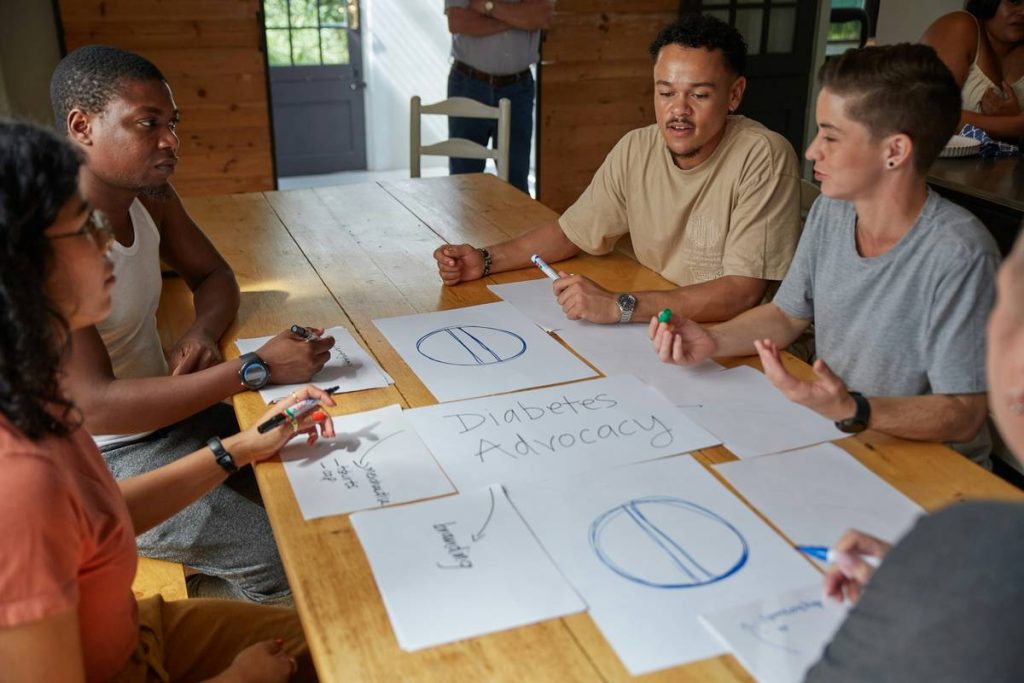
Step 3: Host a Listening Session (Not a Lecture)
Invite 5–10 people from your network to coffee (IRL or Zoom). Ask open-ended questions:
- “What worries you most about [issue]?”
- “When have you felt powerless here before?”
- “What would make you show up to a meeting?”
Listen more than you speak. Your job isn’t to pitch—it’s to discover shared pain points.
Step 4: Co-Create Your First Action
Based on feedback, design a low-barrier, high-impact first action. Examples:
- A phone zap targeting one councilmember
- A “story circle” collecting resident testimonies
- A petition delivery with 50+ handwritten notes
Make it easy to join, meaningful to participate, and visible to others.
Step 5: Track Relational Metrics, Not Vanity Metrics
Stop counting likes. Track:
- # of 1:1 conversations held
- # of people who made a specific commitment (e.g., “I’ll text 3 friends”)
- # of new leaders identified
These predict sustainability far better than follower growth.
7 Best Practices for Authentic Community Mobilization
- Lead with story, not stats. People act on emotion. Share a 90-second personal story before asking for anything.
- Use encrypted group chats. Signal or WhatsApp > Facebook Groups for sensitive issues. Privacy = trust.
- Rotate leadership early. Don’t be the only face. Invite others to host, speak, and decide.
- Schedule regular “pulse checks.” Every 2 weeks, ask: “Are we still solving the right problem?”
- Partner with existing groups. Don’t reinvent—collaborate with neighborhood associations, unions, or faith orgs already embedded locally.
- Normalize “no.” Respect boundaries. “Can’t join? Could you share this with one person who might care?” keeps doors open.
- Celebrate micro-wins publicly. “Thanks to Maria for texting 12 neighbors—3 showed up!” reinforces contribution culture.
RANT SECTION: Can we please stop calling every hashtag campaign “grassroots”? Real grassroots organizing happens offline, in kitchens, laundromats, and bus stops—not just in comment sections. Algorithms don’t pass local ordinances. People do.
Case Study: How a 3-Person Team Organized 2,000 Renters in 90 Days
In early 2023, three Austin renters—Maya, Dev, and Lena—faced mass evictions after their building was sold to a corporate landlord. They had no nonprofit backing, no media contacts, and $37 in their PayPal.
Instead of launching a petition, they:
- Knocked on every door in their complex (128 units)
- Held weekly “porch meetings” with rotating hosts
- Created a Signal group for rapid updates (“Landlord rep coming TODAY—be home at 3 PM!”)
- Collected handwritten letters from elders and kids
Within 60 days, they’d grown to 17 buildings. By Day 90, they delivered 2,000+ signed letters to the city council—and won a temporary rent freeze.
Their secret? “We didn’t ask people to ‘support our cause.’ We asked, ‘What do you need to feel safe?’” — Maya R., now lead organizer with Austin Tenant Union.
FAQs About Starting a Grassroots Campaign
Do I need a nonprofit or legal structure to start?
No. Most successful grassroots campaigns begin as informal collectives. Incorporate only when handling large funds or long-term contracts.
What’s the best free tool for organizing?
Spoke (peer-to-peer SMS) and Signal (encrypted group chat) are gold standards. Avoid Facebook for sensitive coordination.
How do I handle burnout?
Build rest into your plan. Assign “care captains” to check on volunteers. Remember: slow, steady mobilization beats flash-in-the-pan spikes.
Can I run a digital-only grassroots campaign?
Not really. Digital tools amplify—but relationships drive action. Hybrid (online + offline) always wins.
Conclusion
Starting a grassroots campaign isn’t about going viral. It’s about going deep.
You don’t need a marketing degree or a six-figure budget. You need clarity, curiosity, and the courage to ask real people real questions.
Begin with one conversation. Then another. Map your web of trust. Define a demand so sharp it can’t be ignored. And track what actually moves people—not pixels.
Because change doesn’t trickle down. It rises up—from kitchens, classrooms, and community centers led by folks like you.
Now go talk to someone.
Like a Tamagotchi, your movement needs daily care—not just occasional panic-feeding.
Haiku for the Road:
Door knock, coffee steam,
Stories shared in quiet rooms—
Change begins with us.